Showing posts with label lighting. Show all posts

Wednesday, October 2, 2013

Make You Home More Functional With Universal Design Principals

Last week I wrote about Aging in Place and Universal Design Principals. Today I have easy suggestions for you to incorporate these principals in your home. No matter the current state of your home - new, older, recently renovated, in need of renovation, or the dream home that you are planning to build - there are easy changes that you can make to increase functionality and longevity.

Handles Instead of Knobs

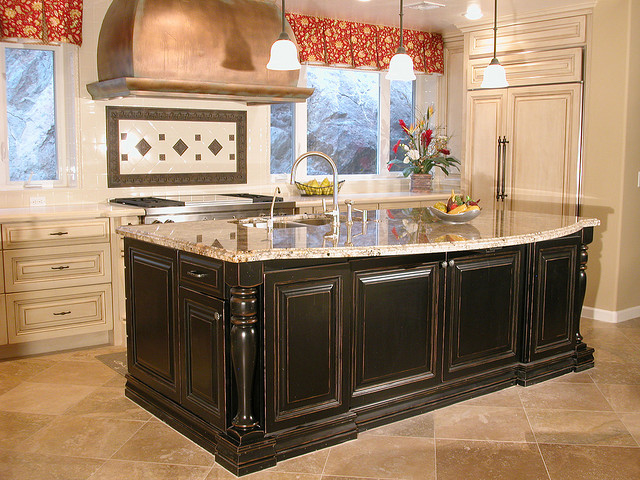
This applies to doors, cabinets, and faucets. A handle is much easier for users of all ages and abilities, whether it is a toddler just learning to turn on the faucet, or experienced arthritic hands. Contemporary Home Design Colorado Custom Interior Design Solutions Boulder

Or, if your budget allows, upgrade to "touch" technology. It's a luxurious upgrade for users of all ages and abilities.
 Luxury Design
On that same thought, light switches can be changed out for easier to use versions. The rocker-style switch is easier on hands than the traditional light switch.

rocker switch

Or upgrade to very cool touch technology light switches.
touch-sensitive-light-switches
 If you will be building a new home or renovating an existing home, now is the time to make changes you'll appreciate now and later. These changes will not only help you to age more easily in your own home, they are luxurious upgrades before you "need" them.

In the Bathroom

Comfort height toilets and vanities Blocking in the walls to support the addition of grab bars at a later date Zero-threshold showers/Continuous shower floors

Interior Design Expert Colorado Smart Interior Design  

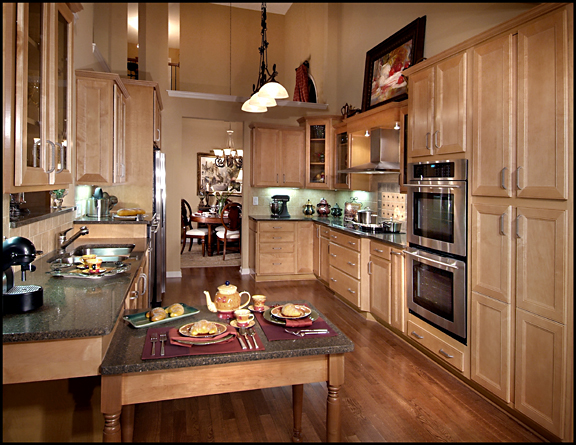
In the Kitchen:


Rollouts and pan drawers in base cabinets
 Smart Kitchen Design Luxury Interior Design in Colorado

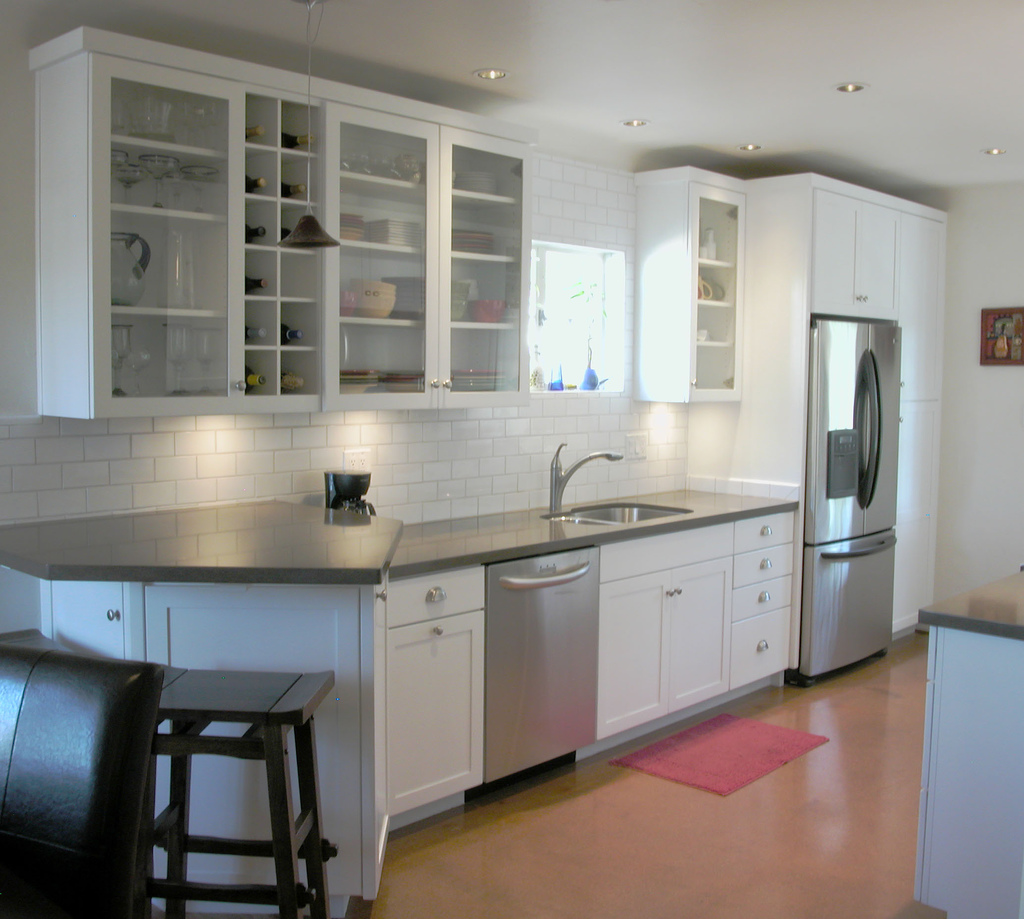
Task lighting onto countertops and work spaces
 Interior Designer Boulder

 Drawer-based appliances such as microwaves and dishwashers
Interior Designer Denver

Throughout the Home

Wider hallways and doorways Lower thresholds Minimal flooring transitions For more ideas on increasing the functionality and longevity of your home, talk to an Interior Design expert today.

Beautiful Habitat: Interior Design & Decoration www.beautifulhabitat.com

Thursday, September 26, 2013

Prepare Your Dining Room for Entertaining

The Holidays are coming, the Holidays are coming! That's right. It's Dining Room season in the world of Interior Designers. It's time to think about that new dining room design if you want to have it ready to go for your holiday dinners, parties and lots of entertaining. Whether you are in need of a full blown make-over, or just a little refresh, I've got some tips for you to consider for your Dining Room Design.

Interior Decorator Rooms

Table

The foundation of your dining room is the table. I prefer a pedestal table to a traditional table with four legs. The pedestal provides more flexibility when entertaining larger parties.
Interior Designer Advice

Don't forget to top your table with a fabulous table setting to welcome guests and set the mood. Interior Decorator Boulder CO  

Upholstery

Notice, I said "upholstery", not just "chairs". Dining chairs should be upholstered, whether just the seat, or the whole chair. Dining chairs should be comfortable and invite guest to linger long after dinner has been served.

Modern Dining Room Decor

 Professional Interior Decorating Denver 

Lighting

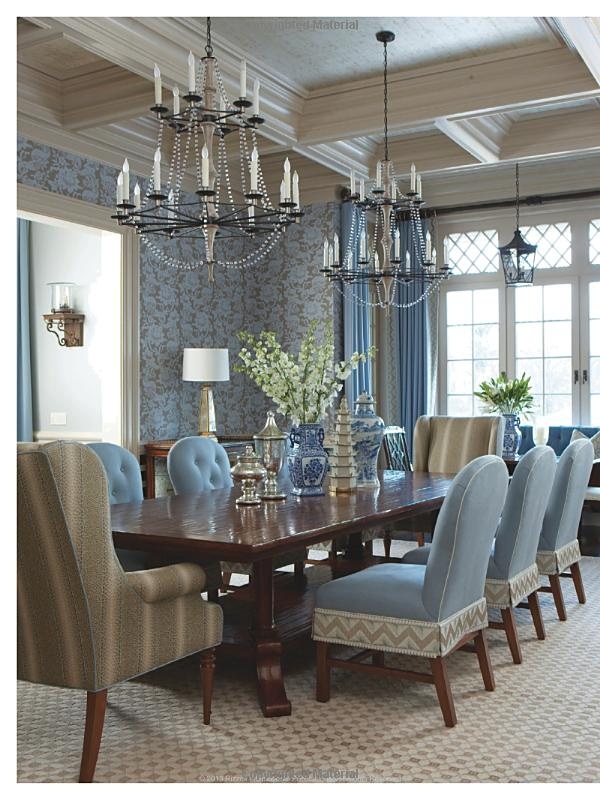
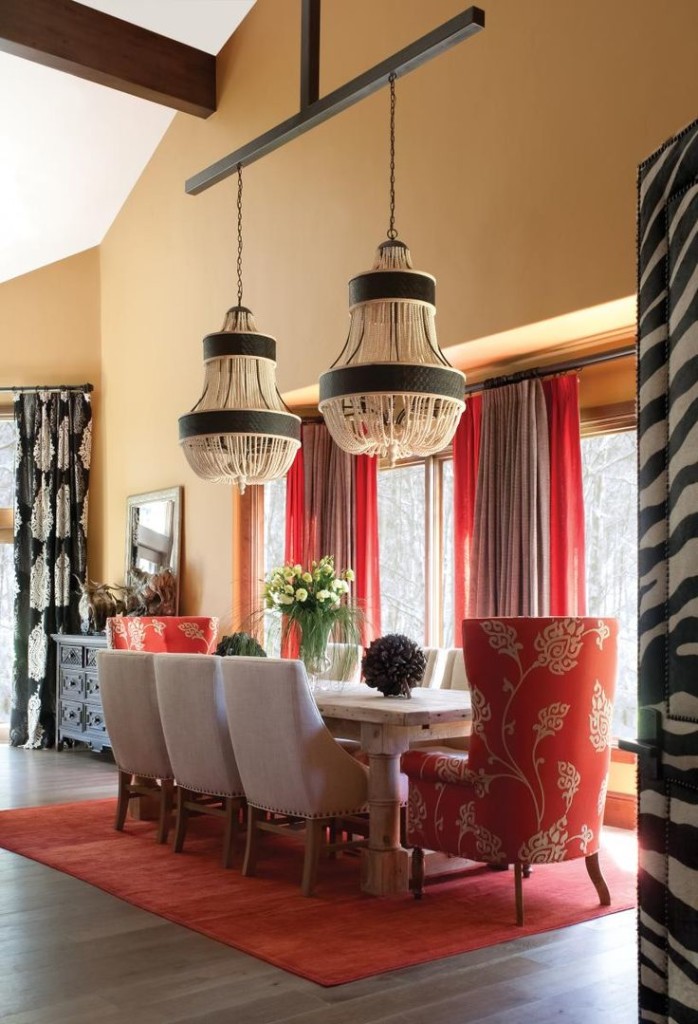
Dining Rooms deserve fabulous lighting and it must be on a dimmer! If you've got a larger dining room or table, don't do a round chandelier in the center or your host and hostess will be in the dark. Take a cue from this Red dining room below - two lights are better than one.
Colorado Best Interior Designers

Stunning Interior Design

Display/Serving

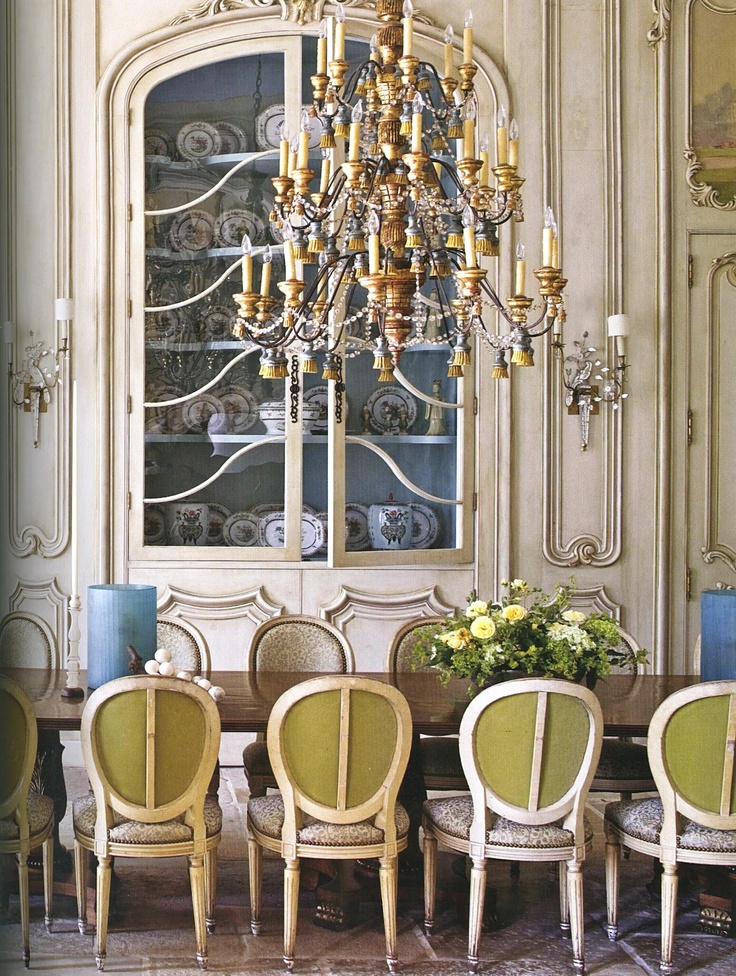
Do you have a large dining room? Lucky you. This is a great opportunity to beautifully display your pieces, or to set up additional surfaces for meal serving.
 Peach and Blue Dining Room

Drapery

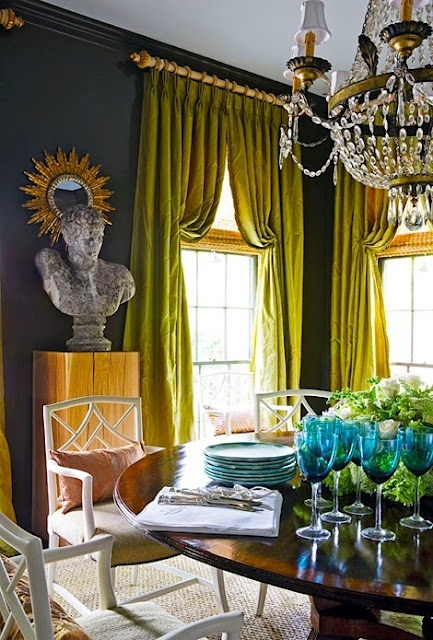
If you are fortunate enough to have a window in your dining room, dress it up!
Interior Decorating Tips

Wall Treatments

Create a stunning focal point with dramatic wall treatments or artwork. Bold Interior Designer Colorado

Good Dining Room Design
via Houzz
 

Don't forget the Ceiling

I love a ceiling with something other than white paint. (see previous posts) Your Dining Room is a great room to add pizazz on the ceiling.
Fresh Interior Design  Denver

Beautiful Habitat: Interior Design & Decoration www.beautifulhabitat.com

Enjoy the Comfort of Your Home for Years to Come with Aging-In-Place and Universal Design

Today’s aging-in-place philosophy and universal design practices work together to enable homeowners to stay safely and comfortably in their own homes throughout their lives. When homes are designed for “all-ages, all-abilities,” the need for expensive moves and remodels due to illness or aging is eliminated. Furthermore, adapting these principles in your home can be done can be done elegantly, without looking institutional.

Interior Design Professional Denver, CO

Despite the similarities between aging-in-place and universal design, the two are not interchangeable. A National Association of Home Builders (NAHB) article explains, “Universal design is useful to meet the needs of many, from a multigenerational family to first time home owners. It is also becoming more popular among clients of custom and even some production builders as a way of meeting current and future needs.
Luxury Design

An additional tenet of universal design is adaptability. While aging-in-place remodeling may call for grab bar installation in bathrooms based on need, universal design would include blocking inside the walls so that a grab bar can be easily added at a future date.” As a designer, I love to educate my clients on the many benefits of aging-in-place and universal design which I believe has a modern elegance to it that is invisible and non-stigmatizing. I also urge clients to think about and incorporate these principal when undertaking any renovation, and well before they "need" these adaptations.

Interior Design Expert Colorado
via Kohler

To give you an idea of what’s involved I’ve outlined the principles of universal design below. It may seem like a lot to consider, but having a home design professional who understands and can use these principles effectively in your home will give you the confidence to face the future and be assured the dignity of an aging-in-place lifestyle. The Principles of Universal Design
  1. Equitable use: The design is useful and marketable to people with diverse abilities.
  2. Flexibility in use: The design accommodates a wide range of individual preferences and abilities.
  3. Simple and intuitive: Use of the design is easy to understand, regardless of the user’s experience, knowledge, language skills, or current concentration level.
  4. Perceptible information: The design communicates necessary information effectively to the user, regardless of ambient conditions or the user’s sensory abilities.
  5. Tolerance for error: The design minimizes hazards and the adverse consequences of accidental or unintended actions.
  6. Low physical effort: The design can be used efficiently and comfortably and with a minimum of fatigue.
  7. Size and space for approach and use: Appropriate size and space is provided for approach, reach, manipulation, and use regardless of user’s body size, posture, or mobility.
While many baby boomers are embracing both concepts and practices, it is often difficult for younger homeowners to realize the immediate value of designing for the future. However, designers and builders are seeing a shift in willingness to consider incorporating aging-in-place concepts and universal design into the overall home plan.

Interior Design Solutions Boulder, CO

It all comes down to one question. Would you rather spend your golden years in a nursing home or the comfort of your own home? Next week I'll have some practical and easy tips to incorporate into any remodel you may be doing in the future.

 Form more information: http://www.nahb.org/generic.aspx?genericContentID=185465&fromGSA=1 http://www.ncsu.edu/project/design-projects/udi/

Beautiful Habitat: Interior Design & Decoration www.beautifulhabitat.com

Thursday, April 4, 2013

Ideas for Kitchen Lighting | Guest Post

Your kitchen could arguably be called the most important room in your house. It is central to that most important of activities for your daily survival, eating. A well designed and lit kitchen can create a more inviting and harmonious heart for your home. Décor ideas in any room essentially aim for one of two goals, fashion or function. For any design specialist their goals are to achieve a merging of the two goals and hopefully reach the ideal of a room that is both fashionable and functional. With a kitchen you definitely want to choose a lighting scheme that leans towards function, because the last thing you want in the room where all your food is prepared is improper lighting.  

Sunlight
It makes for the cheapest and most environmentally green ways to light a kitchen. Nothing makes light like the sun does. Open up your blinds and let the sun shine. Unfortunately some kitchens are designed with small windows or low levels of exposure that keep sunlight out. There are a few cheats you can do to bring sunlight into a kitchen.

Interior Designer in Colorado
Of course the best way is to just install better windows with a greater amount of exposure. However, this may not be the most cost effective way, as window installation could be a major project and rather expensive. It may also be an option unavailable to you if you are in a rental property. Barring that option, you can try to bring a bit more light in through other ways. Open up windows fully in adjacent rooms, paint walls in light colors, and you can even use large mirrors to try and direct some of that sunlight towards your kitchen.  

Hanging and Overhead Lighting

 The typical kitchen design often includes an overhead light source. These may be overhead light fixtures such as a fluorescent installation, or an arrangement of bulbs. Hanging lamps are another way that offers an attractive design that can offer great functionality in a kitchen.
Kitchen Designer Colorado

The ideal placement for any hanging arrangement should be one that descends over and directly lights the important areas of your kitchen. Areas like your sink, food prep counters, and your oven range are all proper candidates where you should install a hanging light arrangement. You’ll want them installed above head level but close enough that the benefit of their light is centered exactly where you need it, such as over a serving counter so you can easily see if those steaks are cooked to your perfect medium rare (or any other preferred doneness). Recessed and Under-Cabinet Lighting One of the most popular trends in home and kitchen lighting design is the use of recessed and under-cabinet lighting schemes. These lighting designs are commonly seen in art galleries, helping to illuminate portraits and sculptures. Their use in home design intends to bring home some of the elegance of an art gallery. They can certainly help a kitchen achieve a very streamlined look, bringing home the feel of a professional restaurant’s kitchen. For the do-it-yourself crowd installing these are often to be considered quite easy to do.

Interior Decorator in Colorado

Remember the function
 Remember that the placement of any lights in a kitchen should focus on the functionality of the room and do little to impede it. It’s the reason that most lighting designs use hanging or recessed ceiling lights. The last thing you want in a kitchen is a lamp on your counter, you may accidentally tip the lamp and you certainly don’t want to be serving your food with shards of glass. Of course, how you design a lighting scheme in your home is something that should be catered to your tastes as an individual. Energize your kitchen life and bring a little bit more light into your home, by yourself or with the help of a professional.   Ross Donald is a freelance writer and design expert with the home and outdoor lighting specialists at LightingSale.com. Ross loves working with people to design their ideal home and understands how important it is to feel both safe and comfortable in your four walls.

 Beautiful Habitat: Interior Design & Decoration www.beautifulhabitat.com

Tuesday, April 3, 2012

Things You Should Know About Architectural Salvage

I am currently working on a very fun and interesting project that involves both Architectural Salvage and Commissioning Custom Furniture. Before embarking on both aspects of this project, I came across two wonderful articles from Colorado Homes and Lifestyles Magazine. Here are 10 Things You Should Know About Architectural Salvage, as printed in Colorado Homes & Lifestyles.

Architectural Salvage Treasures 
10 Things you Should Know About Architectural Salvage: (via Colorado Homes & Lifestyles, with a few additional notes and photos from Beautiful Habitat)

  1. It’s a fun way to go green. When you buy salvaged building materials you’re not only scoring conversation-worthy accents for your home; you’re also diverting materials from the landfill and minimizing the use of raw materials.
  2. Don’t expect perfection. “The reason these pieces are charming and interesting is that they’re obviously recycled—meaning they’re not perfect,” says Eron Johnson, owner of Denver’s Eron Johnson Antiques. Tip: Have a furniture restorer coat any pieces of peeling paint with clear paste wax, which maintains the antiquity of the piece but gives it a smooth finish, Johnson says.
  3. Beware of “too good to be true.” There are a lot of architectural salvage knockoffs out there, warns Johnson—particularly when it comes to marble fireplaces, stained glass and iron work. If the price is too good to be true (as in, considerably less than every other piece you find), it probably isn’t the real thing.
  4. Know what you need. If you’re shopping for pieces that need to serve a function (doors that operate, etc.), bring along a notepad filled with the measurements and quantities you need and pictures of items you want to match, says Tom Sundheim, owner of Queen City Architectural Salvage in Denver.
  5. Find new uses for old items. “The beauty of architectural salvage is it frees an antique from its former use,” says Johnson. Iron garden gates can become decorative headboards; wooden window frames act as room dividers; and an old weathervane emerges as the perfect accent for your mantel. (or lamp bases as seen below, BH)
  6. Interior Decorator Boulder Colorado
  7. Be open to doors. Shopping for antique doors means having an eye for “quality beneath the paint,” says Sundheim. “Know which woods are heaviest. A pine door will weigh far less than a comparable oak door.” If you need the door to function, pony up for a heavier door. Also, for newer homes, understand that you may have to reframe openings to accommodate taller antique doors, Johnson says.
  8. Hit up the hardware section. You might have a hard time finding enough matching knobs and drawer pulls to outfit, say, a whole kitchen. But unearth a few antique pulls (they can even be mismatched) for the right dresser or accent table, and you’ve got a statement piece.Custom Interiors Denver Colorado
  9. Let there be light. If you live in a historic home, says interior designer Beth Armijo of Armijo Design Group, one of the best ways to honor the architecture is to install period-appropriate light fixtures. But, adds Johnson, remember two important safety tips: have an electrician update the wiring and, for pendants, reinforce the ceiling box. (Most antique fixtures are solid brass and heavier than modern fixtures.)
  10. Dig around for your garden. A trip to the salvage yard can yield curios perfect for your outdoor living spaces, too. Look for stone statues or pillars, cast-iron park benches, weathered farm tables, or even vintage bathtubs (great for birdbaths).
  11. Try DIY salvage. Someone just might love that pale-pink tub you’re tearing out of your master bathroom. Before you haul it off to the landfill, consider selling your relics online, or, even better, donating them to ReSource Yard (resourceyard.org), a nonprofit with salvage yards in Boulder and Fort Collins. Sale proceeds benefit waste-reduction programs and donations are tax deductible.
  12. Reuse, Recycle in Colorado Design
My adventures in Architectural Salvage took me to the ReSource Yard in Boulder and Queen City Salvage in Denver. I also perused the Eron Johnson website (which is a great site and user-friendly). Ultimately, I am repurposing some wood that used to be a kitchen floor and I purchased dining chairs on 1stDibs. My adventures continue as I am planning another visit to Queen City for a new art idea I have. Stay tuned for more stories on this interior design project, coming soon.

For additional inspiration in salvage and recycling, check out the post on 23rd Ave Sculpture in Denver. This is scrapyard meets art studio, where old metal is turned into art, furniture and more for your home and garden.

To read the full post, or other "10 Things You Should Know... articles, visit Colorado Homes & Lifestyles.

Do you have treasures that you've salvaged or recycled? Share with us here or on Facebook.

Beautiful Habitat: Interior Design & Decoration www.beautifulhabitat.com

Thursday, March 1, 2012

Salvaged Driftwood Decor | Guest Post

Hi! I’m Joanna, a writer with Arcadian Lighting, a go-to source for all things lighting, including awesome light fixtures. I love my job, but to be honest it doesn’t seem like work at all. I spend my days searching the web for lovely interiors and terrific decorating ideas to share with blog readers like you. Thank you Tennille for allowing me to share today.

With grey being one of the dominant colors in interiors going into 2012, it’s no wonder we are seeing weathered salvaged woods, like driftwood, popping up in rooms everywhere. From farmhouse to loft, woods are light, rough and unfinished. Tables are perhaps the most popular pieces being made from driftwood, but there are many ways to incorporate it into the home. A driftwood table lamp anyone? Here are a few ideas I found from around the Internet. Which is your favorite?


This seaside cottage features a remarkable driftwood coffee table which goes nicely with the room’s style.


Three starburst framed mirrors are made from small pieces of driftwood. This would make an easy DIY project if you are fortunate to live in close proximity of the beach.


A small end table of driftwood and metal goes well with the rustic elements of this screened porch.


Rustic driftwood shelves make a nice place for showing off a vignette of books, candles and a jar of seashells.


This unexpected lighting fixture, tall driftwood floor lamp, creates a can’t miss focal point in an eclectic living room.


Small pieces of reclaimed wood are joined together to create an unusual flower vase. This would make a lovely centerpiece used in multiples down a long dining table.


A cottage bathroom gets its own touch of driftwood on the framed mirror. The contrast between the patinaed wood and the rich marble below works well.


This isn’t driftwood but you can see the many possibilities of using driftwood and other reclaimed wood around the house. I love that handcrafted hanging lantern. Images 1 | 2 | 3 | 4 | 5 | 6 | 7 | 8

Accentuate your beautiful driftwood decor with pendant lights and beautiful lamps!
Beautiful Habitat: Interior Design & Decoration www.beautifulhabitat.com

Tuesday, January 24, 2012

Obituary for the 100W Bulb (and tips for real efficiency)

Lighting Design Denver Colorado 
Full Text of Atlantic Electric Supply's Obituary for the 100W Bulb:
Lamp, Hundred Watt

The light of Hundred Watt burned out on Jan. 1, leaving the world a little darker but with more energy. Hundred Watt was eliminated by an industry in which he was once revered despite last minute congressional efforts to save him.

This venerable member of the Lamp family was always a welcome guest and brightened countless lives for more than a century. Known to his friends as 100A, Mr. Lamp was also referred to as "the filament" by his detractors. He was often compared to Santa Claus in his ability to deliver smiles and light.

Born in 1879 in Menlo Park, NJ, to the late Thomas Alva Edison, Hundred Watt grew from a dim carbon filament to a bright tungsten Lamp. He leaves behind three siblings: Forty Watt, Sixty Watt and Seventy-Five Watt, all of whom suffer from terminal low lumen efficacy syndrome. (that's lighting-industry speak for "not energy efficient")

Hundred Watt is also survived by his son, Seventy-Two Watt-Halogen, who bears a striking resemblance to his father but is not quite as bright. In addition, Hundred Watt is survived by a nephew, Twenty-Six Watt CFL, whom many find slow to warm up.

Lighting Design Boulder Colorado
I thought this was cute, so wanted to share with my fabulous readers. Lighting is incredibly important to creating beautiful interiors. I'm sure that you've noticed the difference in paint colors, fabric, or makeup when you move from one light source to another. Not only do Interior Designers learn a lot about lighting, there are many that specialize only in Lighting Design. I do agree with the need to improve energy efficiency, but I don't agree with the banning of incandescent light bulbs. There are many roads to better energy efficiency, but this is not a good one. Just blindly banning incandescent (to be followed by halogen) bulbs is not a solution and will leave us all with the bad color-rendering, slow warm up times, and poor dim-ability of CFLs. Yuck

Other Roads to Efficiency

Thee are other means to reach energy efficient lighting in your home. The best long-term solution is adding dimmers. Dimmers are an easy DIY project and dimming your incandescent or halogen bulb by just 10% will double the bulb life. That's right - DOUBLE. And this becomes exponentially more efficient as you dim it lower and lower.
"Dimming your incandescent or halogen bulb by just 10% will double the bulb life. That's right - DOUBLE. And this becomes exponentially more efficient as you dim it lower and lower."
If you are a lover of good lighting, like myself, and want to know more, you don't need to take a lighting design class. I recently stumbled upon a book Losing Edison. A book review is available on the Blog Freedom Light Bulb.
Beautiful Habitat: Interior Design & Decoration www.beautifulhabitat.com

Wednesday, November 30, 2011

Perhaps it is life’s fast pace, coupled with the economic downturn, or simply the need to take refuge from it all, that has shifted interior design’s focus to what matters most. Accordingly, there has been a return to appreciating natural products, comfort and functionality, and revamping what is at hand to reflect current longings. A keen awareness of sustainability and eco-friendly attitudes also now influence decision-making when adding anything new to the home, from light bulbs to appliances. Here is a look at five important principles guiding 21st century design and how they can be applied to personal living spaces:


Furniture With Uncluttered Lines and Simple Designs

Modern furniture is sleek and simple, with geometric lines replacing overly intricate curves or fancy wooden legs. Conversely, large boxy-shaped sofas and easy chairs invite sinking into ample cushions of leather, suede, velvet or other smoothly finished fabrics from nature’s color palette. Bold patterned pillows and throws supply interest and pull a room together. Functional ottomans in the same shape and fabric can be snugged up for resting feet or used for snack tables or game and magazine rests, with the emphasis on usage and flexibility.

Thus, if replacing sofas and chairs, utility and comfort should be of primary concern. Look for simple designs with soil-treated fabrics that will hold up to wear and tear, yet be inviting enough for everyone. Similarly, if reupholstering comfortable pieces, choose from fabrics that echo nature: beiges, soft blues and greens, terra cottas, warm browns, muted grays. These are restful to look at and will be the most harmonious when adding accessories. Using pillows to add decorative touches allows seasonal enhancements, and keeping a few special ones on hand for entertaining ensures freshening the look in a jiffy.


Walls That Do Not Detract

21st century design de-emphasizes overly decorated walls, following the same minimalist approach as furnishings. Walls are increasingly free of wallpaper, borders, or other distracting elements, instead acting as quiet junctures for interesting, similarly uncluttered windows and doors that provide natural light. Moldings and baseboards are simplistic and non-ornamental, often painted the same or complementary colors as walls. Moreover, tray ceilings with depth perception provide uncluttered upward interest for lighting arrangements. These often include recessed swivel bulbs that ensure light falling where most desired, on artwork or over reading areas. Dimmer switches create atmosphere.

While walls are plainer, they radiate charm and warmth through artwork in various genres. Large oil or acrylic paintings on canvas are often the focus of soaring floor-to-ceiling spaces without windows. Moreover, they are just as apt to be frameless, giving the appearance of floating rather than being confined. Mirrors or glass displays also offer breathtaking dimension, especially when reflecting outdoor scenes or unique lighting fixtures hung over tables or central locations.

Selecting art with modern themes and strong colors will give soft-hued walls personality. While paintings or replicas are always stylish, rooms often dictate other possibilities. A bright art deco poster in a simple metal frame will make any kitchen or family living area seem more alive, while smaller prints with ample color and design are well-suited to baths, bedrooms, dining areas and any walls interrupted by windows or doors and not as spacious.


Kitchens With Eco-Friendly Functionality and Centralized Design

Kitchens have been the heart of the home forever, always family friendly though sometimes crowded. Modern kitchen design has magnified the gathering concept with much more space to enhance mixing eating, socializing, and food preparation, too. Furthermore, while once designed to blend in as insignificantly as possible, modern appliances now sport a new boldness. Stainless steel and other metal finishes formerly relegated to restaurant kitchens grace home appliances, their commercial looks underscoring function and practicality rather than pretense. Designed to take on big jobs nowadays, more relied upon than ever, there is no attempt to hide them. Additionally, their eco-friendly operation requires intelligent engineering and design that makes saving energy a daily kitchen feature.

Thus, no-nonsense appliances are as large as space permits. Remodeling a kitchen, then, should revolve around enhanced spaciousness for family and friends to gather in, but also the accommodations needed by state-of-the-art appliances that double as energy savers through modern engineering. The natural crushed stone and granite products characterizing today’s kitchen workspaces and countertops continue the same functional feeling. Well-placed artwork and colorful rugs, cookware and dinnerware provide warmth.
Custom bathroom design Denver Colorado


The Bathroom As An Oasis

As 21st century designers have embraced comfort as the key to home living, it is unsurprising that bathrooms have emerged high on the revamping list. Not only inspiring remodeling projects, they have spurred new home designers to rethink how this room is used. Once the purveyor of simple functionality, prone to being cluttered with frilly curtains and bath accessories, the modern bath now more resembles a luxurious spa, a comfortable oasis for relaxation.

Consequently, fixtures have been designed for ease of use, with modern, eye-appealing lines. Footed or sunken soaking-tubs may be centrally located or backed by a cozy fireplace, while showers can accommodate more than one with larger enclosures and multiple showerheads offering streaming massages. The release of steam only provides another spa-like quality in this home retreat.

Updating a bathroom by replacing old fixtures and faucets provides modern functionality. New vanities and countertops with crushed stone looks, larger floor tiles in neutral tones, and walk-in showers are further ways to accomplish 21st century appeal. Rugs and towels in natural colors and textured fabrics will extend this aesthetic. Also, replacing fluorescent tubes with eco-friendly light bulbs in soft bronze or satin nickel light fixtures imitates natural light where most needed, around mirrors and vanities; adding a high window or two encourages soaks in natural daylight in even the oldest tubs.


Windows And Doors Add More Than Light

With the impetus behind eco-friendly light bulbs in mind, natural lighting is now in vogue as well. Likewise, more attention is paid to window and door design and placement. Once regarded as challenging to conceal while simultaneously allowing light inside, most concealing now is reserved for evening or personal privacy. Thus, windows and doors are in the spotlight, equipped with energy-efficient glass and better insulation and mobility for easy cleaning. Sourcing natural lighting, preventing drafts and damaging sunrays, while also looking nice, is a major plus. And when it comes to privacy and window coverings, less is more. Blinds and shades of natural textured materials are popular, as are any treatments allowing maximum exposure but ample privacy. Once again, an appreciation for nature surpasses unnatural-looking solutions.

Similarly, doors have been given more design prominence. Replacing a section of wall with double French doors or paneled sliders not only allows increased light, but a distinct outdoor connection as well. Using large plants or small trees in painted ceramic pots by the door’s interior allows the release of beneficial oxygen for healthier living. Moreover, doors with a lot of glass make a room feel larger - a clever way to expand when space prohibits it.

The above elements of 21st century interior design and how they can be applied are a testament to simple, uncluttered living. Establishing a home environment that focuses on simple luxuries, personal comfort, colorful relief and the unparalleled presence of nature and its many gifts is the goal.

Beautiful Habitat: Interior Design & Decoration www.beautifulhabitat.com

Wednesday, August 31, 2011

I have always been fascinated with lighting design. As it was so astutely stated by famed Interior Decorator Ruby Ross Wood, "There is one fundamental fact about lighting: Where there is no light, there is no beauty." Lighting is an important element to a successful Interior Design. However, we've also elevated the light fixture beyond a functional necessity into pieces of artwork.

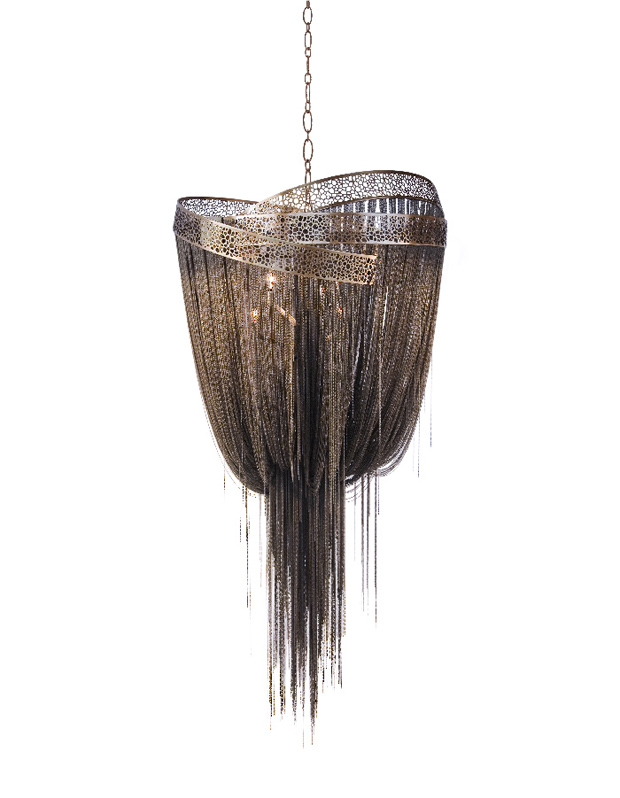
The Mother Chandelier from designer Baran Baylar at Hudson Furniture, is lighting, jewelry and art mixed into one amazing fixture. I admit that I am in love.

Lighting Design in Denver Colorado
The frame is made of laser cut rings, with jewelry-like chain details hanging down and adding a balance of drama, elegance, and edginess.

The Mother Chandelier is available in Nickel, Black, Bronze and Polished Bronze finishes and sizes can be customized.

Lighting Design in Boulder ColoradoGlamorous Interior Design in Denver ColoradoHigh end Interiors in Colorado
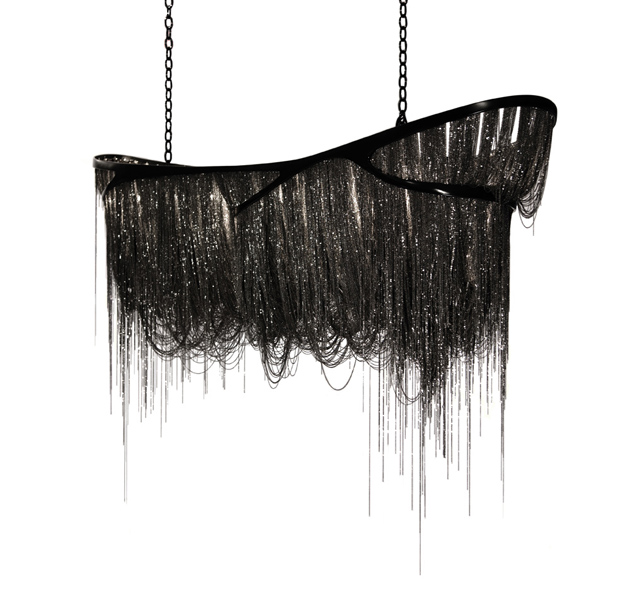
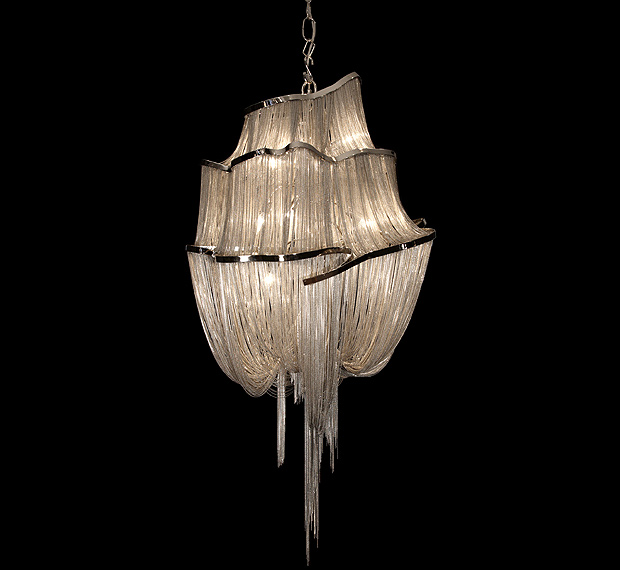
In addition to the Mother Chandelier, Hudson Furniture has several similar offerings with equal glamor and drama, but even larger in scale.
Dramatic Interior Design in Denver ColoradoDragon Chandelier in Black
Dramatic Interior Decoration in Denver ColoradoAtlantis Chandelier in Nickel

Designer Lighting in Colorado

Beautiful Habitat: Interior Design & Decoration www.beautifulhabitat.com

LinkWithin

Related Posts with Thumbnails